E313 - Weird, Wacky, Wonderful, CES 2026
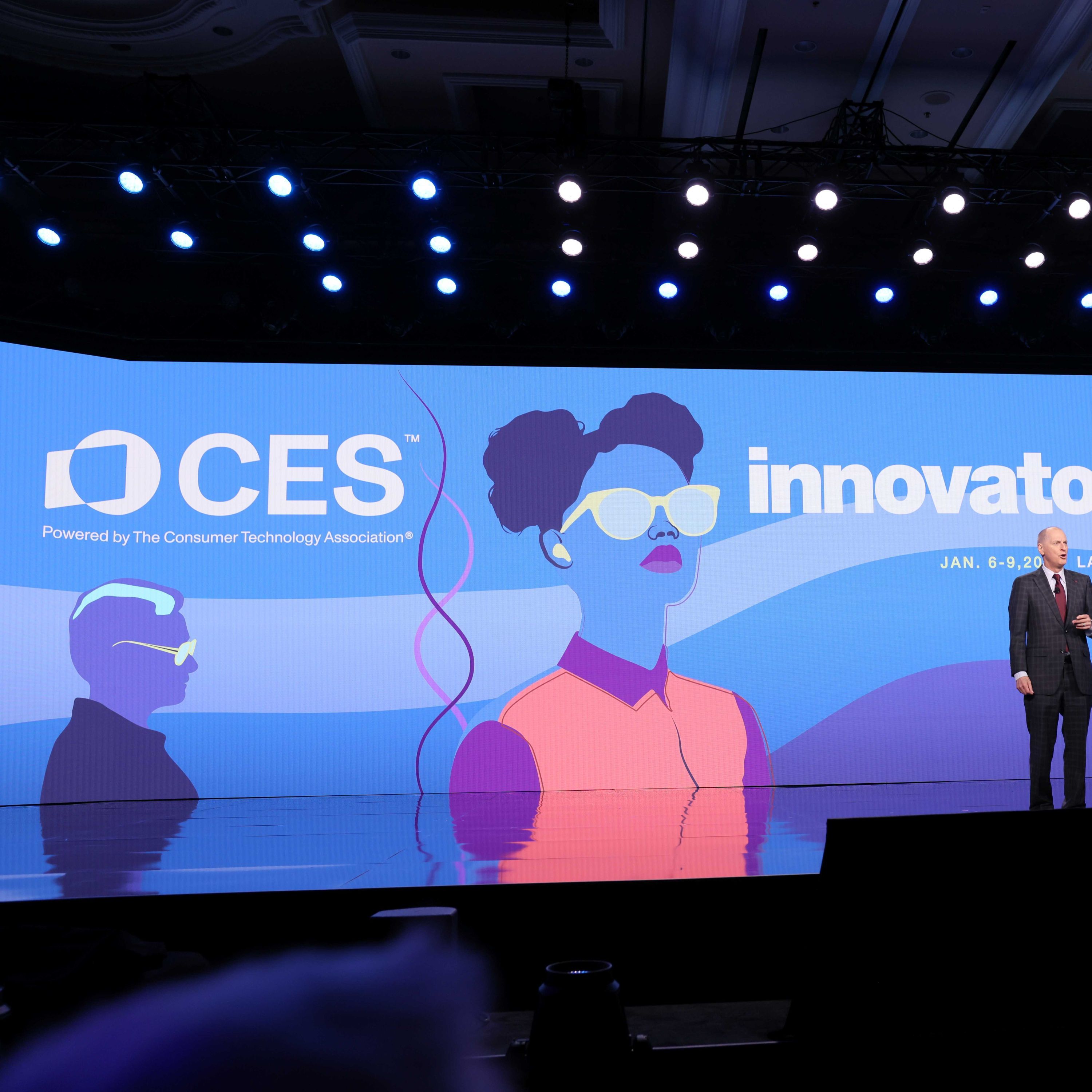


In this episode of Human Factors Cast, Nick Roome and Barry Kirby dive into the latest and greatest from CES 2026. You'll hear about the most exciting and disappointing new tech, from AI missteps to innovative modular repairable headphones. Learn about the challenges and opportunities of integrating AI in consumer products, why usability still matters, and how evolving tech can both enhance and complicate daily life.
Support us:
- Patreon: https://www.patreon.com/humanfactorscast
- Buy us a coffee: https://www.buymeacoffee.com/hfactorspodcast
- Merchandise Store: https://www.humanfactorscast.media/p/Store/
Human Factors Cast Socials:
- Join us on Discord: https://go.humanfactorscast.media/Discord
- Twitch: https://twitch.tv/HumanFactorsCast
- YouTube: https://www.youtube.com/HumanFactorsCast
- LinkedIn: https://www.linkedin.com/company/humanfactorscast
- Twitter: http://www.twitter.com/HFactorsPodcast
- Facebook: https://www.facebook.com/HumanFactorsCast
- Our official website: www.humanfactorscast.media
Reference:
- Our tools and software: https://www.humanfactorscast.media/p/resources/
- Our Ethics Policy:https://www.humanfactorscast.media/p/ethics-policy/
- Logo design by E Graphics LLC: https://egraphicsllc.com/
- Music by Kevin McLeod: https://incompetech.com/music/royalty-free/
Feedback:
- Have something you would like to share with us? (Feedback or news): https://go.humanfactorscast.media/feedback
Disclaimer: Human Factors Cast may earn an affiliate commission when you buy through the links here!
Mentioned in this episode:
Listen to Human Factors Minute
Step into the world of Human Factors and UX with the Human Factors Minute podcast! Each episode is like a mini-crash course in all things related to the field, packed with valuable insights and information in just one minute. From organizations and conferences to theories, models, and tools, we've got you covered. Whether you're a practitioner, student or just a curious mind, this podcast is the perfect way to stay ahead of the curve and impress your colleagues with your knowledge. Tune in on the 10th, 20th, and last day of every month for a new and interesting tidbit related to Human Factors. Join us as we explore the field and discover how fun and engaging learning about Human Factors can be!https://www.humanfactorsminute.comhttps://feeds.captivate.fm/human-factors-minute/
1202 - The Human Factors Podcast
Listen here: https://www.1202podcast.com
Let us know what you want to hear about next week by voting in our latest "Choose the News" poll!
Follow us:
- Nick: https://www.twitter.com/Nick_Roome
- Barry: https://twitter.com/Baz_k
- Blake: https://www.instagram.com/dontpanicux/
- Join us on Discord:https://go.humanfactorscast.media/Discord
Thank you to our Human Factors Cast Honorary Staff Patreons:
- Michelle Tripp
- Neil Ganey
Support us:
- Patreon: https://www.patreon.com/humanfactorscast
- Buy us a coffee: https://www.buymeacoffee.com/hfactorspodcast
- Merchandise Store: https://www.humanfactorscast.media/p/Store/
Human Factors Cast Socials:
- Twitch: https://twitch.tv/HumanFactorsCast
- YouTube: https://www.youtube.com/HumanFactorsCast
- LinkedIn: https://www.linkedin.com/company/humanfactorscast
- Twitter: http://www.twitter.com/HFactorsPodcast
- Facebook: https://www.facebook.com/HumanFactorsCast
- Our official website: www.humanfactorscast.media
Reference:
- Our tools and software: https://www.humanfactorscast.media/p/resources/
- Our Ethics Policy:https://www.humanfactorscast.media/p/ethics-policy/
- Logo design by E Graphics LLC: https://egraphicsllc.com/
- Music by Kevin McLeod: https://incompetech.com/music/royalty-free/
Feedback:
- Have something you would like to share with us? (Feedback or news):
Disclaimer: Human Factors Cast may earn an affiliate commission when you buy through the links here.
(Audio) E313 - Weird, Wacky, Wonderful, CES 2026
===
[00:00:00]
[00:00:00] Nick Roome: Hello and welcome everybody. Back to another episode of Human Factors Cast. I'm your host, Nick Rome, and I'm joined today by Mr. Barry Kirby.
[00:00:08] Barry Kirby: Hello there. Great to be here again.
[00:00:10] Nick Roome: Hello Barry. This is episode 313. We are recording this live on January 20th, 2026. So this is Human Factors Cast. We got a great show for you lined up today.
[00:00:21] Nick Roome: We're gonna be talking about, uh, what, this is one of my favorite episodes of the year where we talk through all of the fun. Things from CES Consumer Electronics Show happening in Las Vegas. I know this happened a couple weeks ago, but, uh, due to our scheduling, we are just now getting to it. Uh, but for some programming notes.
[00:00:40] Nick Roome: Barry, I know you have a very exciting update that you'd like to tell people about.
[00:00:44] Barry Kirby: Yeah, certainly over at 1202 we've got the first interview in the bag. So having had a hiatus for what, 12, 13 months we decided to relaunch with what we're doing and we are gonna be talking about UX and particularly the use of UX in defense.[00:01:00]
[00:01:00] Barry Kirby: But it's on not all roses because when my guest decided, uh, went in and to register and give me all his guest details, he sent me a message saying, is your website supposed to look like this? And you went to, went to the link for 1202 podcast.com, which I've been telling everybody to go to for quite a long time.
[00:01:18] Barry Kirby: And it turns out it doesn't go to my podcast page anymore. And because somebody else set that, that, uh, domain licensing up for me, I tried to get in touch with them to say, look, could you just sort this out? And, and they couldn't. And all sorts of shenanigans trying to get it sorted has ensued. So in order to circumvent all that, you now go to 1202 pod.com, not 1202 podcast.com.
[00:01:43] Barry Kirby: And I've now got domain security on that and everything under my own control because I'm, I am that sort of person. So yes, you are now in the first interview will go live next week at 1202 pod.com.
[00:01:55] Nick Roome: Excellent. That, that I, I remember when we had our own domain issues and now, now we have human [00:02:00] factors cast.com too.
[00:02:01] Nick Roome: So this is, it's all good. Go to the right domains. That's it. But let's get into the news 'cause I'm excited for it.
[00:02:06] Nick Roome: That's right. This is the part of the show all about human factors news. Barry, what's our story this week?
[00:02:12] Barry Kirby: So this episode we are heading to, as you've already said, CES 2026, where human factors is quietly the main character on one side. You've got genuinely thoughtful innovations such as modular repairable headphones that anticipate battery regulations, stair climbing, vacuums and lidar lawn bolts, trying to adapt to real homes, circadian friendly lamps and sunrise clocks that respect sleep biology and safer paper-based batteries and reducing e-waste On the other side, though, we get the worst insure tour voice only refrigerators with no handles.
[00:02:45] Barry Kirby: AI baristas that require subscription to keep making coffee anime ai soulmates packed on your desk with always on, uh, mics and cameras and fitness gear that opening, emits it can protect your data. So Nick, you've [00:03:00] seen all the stuff within CES and what's been going on. What's your thoughts? What have you liked?
[00:03:05] Nick Roome: Yes, we've consolidated several lists for you all. So we're looking at the best and the worst of CES. And one thing that is really sticking out to me, at least from all the coverage that I've seen, even outside of these, seen, even outside of these, is the use of ai. And this is coverage that's coming out from a lot of different sources, not just these lists, but coverage actually coming from the event. You're seeing AI everywhere, and this is, I think even to some companies detriment.
[00:03:32] Nick Roome: They're calling things that aren't ai, ai. Just to get in on the buzzword, just to get in as part of the conversation. You know, the, these things are cool in some ways, but they don't actually do it. They, they don't actually use AI to do the thing, but they're still calling it AI as a buzzword. And I think you know, that it's a cool thing, but I don't think we need to actually just apply it blanketly to everything.
[00:03:59] Nick Roome: The other thing that I'm starting [00:04:00] to notice is that there's a lot of these devices that are coming out of CCEs that I think suffer from the, uh, the technical term in ification
[00:04:16] Nick Roome: products worse over time. And I think they're at. You know, that were showcased here that are actually bad experiences. And, um, you know, especially for things that are supposed to be smart appliances, I wonder if we are more willing to accept these bad experiences for these smart devices.
[00:04:35] Nick Roome: And you know, the one that comes to my mind is, you mentioned it at the tail end of your, um, of the blurb, which was like the barista that you need a sub subscription to keep making. Like why to me it's like, there's another one about a bike and it just, to me, it feels like we are sort of building in these bad experiences because of [00:05:00] marketing models and not because it's what's right for the end user.
[00:05:05] Nick Roome: And that, that bothers me. But we'll get into all that more. But Barry, what's, what's your sort of thoughts, what's resonating with you about CES? This.
[00:05:12] Barry Kirby: So clearly Cs, uh, robots was a massive theme across all different types and who thought that we would need quite so many in play. But this is all very much a, um, historically you, you, they'd be a very niche thing to see and you only like the very rich people would have them.
[00:05:32] Barry Kirby: But it is getting to the point where they're making people's everyday lives easier. I mean, I remember when we first started talking about the robot vacuum cleaners. I never thought I'd have one in my house as such for many years. We've now got one on one of the floors and that's, you know, that's fantastic.
[00:05:48] Barry Kirby: We take it for granted. It it ever since Christmas. It's sort of, it hoovers the floor every day. But also, but what I'd like. Coming back to CES is, they're not just saying right, it now exists. [00:06:00] They're now evolving it. So we'll probably get into it. But we've now got what the vacuum cleaners back 'cause he's climbing the stairs.
[00:06:07] Barry Kirby: There is also the development for development sake. So the cynic in me, so see, so TVs are ba, are back. But really they get thinner. They get bigger. Why, why do we need them so thin and so big? So the, the big dri big drivers like wallpaper TVs, we don't necessarily. Need that, but if you wanna show off stuff then that's cool.
[00:06:29] Barry Kirby: Security seems to be more of a thing. Um, so they're talking about smart locks, um, and basically having, uh, a lot more robust technologies looking at smart locks, which is when you are look at the front of your home. But a lot of them do still, still, still seem to have the problem of being device dependent.
[00:06:46] Barry Kirby: So what they're trying to get over is like, they need to use biometrics and things like that, but it's not actually saying that your home is saying that your phone's home. Bit more to self-care. So you've got various lamps and sleep supports and things like that. So really trying to, [00:07:00] um, use technology to give you a, a better quality of life which is quite nice.
[00:07:06] Barry Kirby: But it seems that some of this really is coming into consumer market. It it's neat, it's geeky, it's bringing geeky to the masses. But as you kind of alluded to, is the key to all of this is usability. And if it just seemed to be that we are, that historically you could have really cool gadgets and get away with it 'cause the technology wasn't quite there, ability is now a serious thing.
[00:07:30] Barry Kirby: And we should be, there should be no excuse for not having good, usable products. Lecture over should we have, which are your which are your favorite items that you, that you would like to, uh, to talk through?
[00:07:43] Nick Roome: Um, we have a list here. Why don't we just why don't we just talk through the list here We have, let, well, let's, let's start with the Atlas robot. What do you think about the Atlas robot?
[00:07:54] Barry Kirby: Interesting, isn't it? 'cause it's, again, it, it's one of these robots that is actually a robot. It looks [00:08:00] like it, and it, it, it sort of smells like it. It's trying to be almost a Swiss army knife of capabilities, but it seems like it's actually robust.
[00:08:09] Barry Kirby: It seems like it's been on its real journey, but everybody knows, obviously the coming from Boston Dynamics, it's gone through, it's gone on that journey, and we've all followed that journey. So it's interesting to see what it, what it's there and what it's doing. Personally, I am still not entirely sure we are there to have such device in your home.
[00:08:29] Barry Kirby: Is it still gonna, is it gonna feel intrusive being what it is, but I'd still have one if, if anybody's willing to pass one over. What about you, Nick? What, where, where you work with that at, with Atlas?
[00:08:39] Nick Roome: Yeah, so this particular version of Atlas that they had brought up during CES was to be worked on in Hyundai factories.
[00:08:48] Barry Kirby: Hmm. Yeah.
[00:08:48] Nick Roome: Um, and so, you know, I don't, I, I also don't think it's ready for the home, but it's interesting that now we're starting to see it in the workplace. And I think that's the first stage to acceptance to, to having some of these things in the phone. If [00:09:00] you're going to work and you're working alongside these things, then it makes it a lot more easy, more palatable to bring it into the home.
[00:09:06] Nick Roome: So that way you can have it alongside you and your family. You know, there's, there's, um, an interesting tactile thing happening with these robots. There's you know, accounts of these being soft touch plastic and, and the. The thing that people are talking about is, is sort of how they feel about the engineering, how they feel about the robot itself.
[00:09:29] Nick Roome: But I think this one took away the best robot at CES. So it, it's worth talking about and it's exciting as somebody who will, um, will have no hesitation with bringing, bringing in a humanoid robot into the home so that they can wash my dishes and my clothes and stuff. Uh, and I don't have to worry about that.
[00:09:46] Nick Roome: That's, uh, yeah, let's do it. But yeah, I think, I think we're, we're closer, but maybe still a long way off. I'll bring up the comment. We got a comment here, Andres from the lab had a buddy of mine went to a restaurant recently that had an AI [00:10:00] scale to predict the weight of your food.
[00:10:02] Nick Roome: So as we're, as we're kind of talking about AI and sort of how AI is so prevalent in everything, it's a great comment. Thanks Andres. Um, let's get into the next one. 'cause this one actually I am selfishly excited for.
[00:10:17] Barry Kirby: Yeah, so, so this is Lego and they've come up with a Lego smart brick.
[00:10:24] Barry Kirby: So Lego is, is always been evolving and developing. The idea that they bring out smart bricks that basically got smart circuitry inside them. So then you can have circuit sensor speakers and, and lights in. And if you react intelligently, it takes your, um, standard Lego sets and takes them to the, basically to the next level.
[00:10:46] Barry Kirby: I wouldn't, uh, whether this is a step too far for Lego. They've had Lego nic, they've had, they've tried electronic stuff in the past with so I remember having some electronics and um, Lego technique kits that had that level of [00:11:00] control. But one of the selling points for, for Lego has always been that it's a, it's a simple toy or it's a simple concept that you then let the imagination flow.
[00:11:10] Barry Kirby: Every time it's tried to do the, the slightly more engaging stuff. So the electronics and the hydraulics, hydraulics control, it's never quite caught on and developed in that way. So what do you think make, do you think this is gonna be different for them? Do you think this is gonna be a, a grower?
[00:11:28] Nick Roome: I think so.
[00:11:29] Nick Roome: You know, you can compare this to like the Super Mario sets that they've done before. And the way that this is different from those is that the Super Mario sets sort of react to, i, I think they use sort of like vision to, to understand what blocks they're over and they do pattern recognition and that type of thing.
[00:11:48] Nick Roome: But this one is actually like bricks connecting with each other wirelessly.
[00:11:53] Nick Roome: Mm-hmm.
[00:11:53] Nick Roome: And I think this goes this to, to answer your question of whether this ruins imagination. No, I don't think so. I think this [00:12:00] enhances it in a lot of ways. The specific thing that they showed here was, was Star Wars.
[00:12:05] Nick Roome: And so they, they gave a few examples of how, like if you're dog fighting with an X-Wing and a tie fighter, they're going to make their relative sounds and will react, depending on the position of one to another. So if the X Wing's behind the tie fighter, you'll hear blasters from the X-Wing. And likewise, if the tie fighter's behind the X-Wing, you'll hear blasters from the tie fighter and you know, they're having this dog fight in space and you might hear some additional sounds.
[00:12:29] Nick Roome: That's really cool. And if you mm-hmm. Um, if you think about the technology here that, um. Reacts to your creativity. Imagine what it would be like to walk around the world with your own personal soundtrack. I think that's kind of what's happening when with these, when children go and play with these toys.
[00:12:48] Nick Roome: There's a lot of people who are really negative on these smart bricks. But I am actually very positive on them because of some of the things that you brought up with Lego technic with some of the other mechanical [00:13:00] elements of Lego. Whole school teams building robotics. And so I can imagine that if they open source these bricks to a certain degree or provide a framework for children to code.
[00:13:13] Nick Roome: Their own responses to these bricks as they interact with other elements. I think the sky's the limit with really what you can do with Lego and robotics, and that to me is really exciting with a young, you know, for somebody like me, with a young child who's super into being curious about the world.
[00:13:30] Nick Roome: So for me it's a huge win. And I'm excited for it.
[00:13:34] Barry Kirby: Good. No, I think, like I said, I think it'll be interesting to see how it, how it's implemented and what they do, what they learn from how they've done these things in the past that haven't necessarily taken off. And it might just be that the level of technology and the level of miniaturization allows a significant step change in what they're doing.
[00:13:52] Barry Kirby: I hope, I, I hope I'm My si my, my cynicism is not rewarded. I hope it's good.
[00:13:59] Nick Roome: [00:14:00] I hope it's good too. Let's talk about vacuum cleaners. You brought this one up.
[00:14:03] Barry Kirby: Yeah, I mean, as I said in the intro, I think the, one of the tasks that everybody hates to do is vacuum cleaning. In, when we talked about cess, I think for the past couple of years, there's always been a slight evolution of this vacuum vacuum cleaning.
[00:14:18] Barry Kirby: Ever since you've got the original rumba, you know, that there, the basically the flat disc, um, that, that goes around and can get under your things. Then the, there was a slow evolution then to be being able to do the edges. How far out do the, um, do the rotating elements go that, that actually get your get the dust.
[00:14:36] Barry Kirby: Then there was another mini step change when you can also get the mopping devices. But the biggest fundamental problem is that you. If you lived in a bungalow, absolutely sorted. If you are just on a single, single story, um, apartment or something like that, they're fantastic. But as soon as you get into a multi-floor situation, you have to have multiples of them.
[00:14:57] Barry Kirby: And at 500 pounds each, or, you know, [00:15:00] somewhere between two and 500 pounds if, if not more, that's an expensive investment. And you need to have the space for them to store and all that sort of stuff. So interestingly this year, the biggest thing around, around this vacuum cleaner was the ability for it to climb stairs.
[00:15:14] Barry Kirby: And so it has two legs basically on either side that it can help not only climb the stairs, but vacuum the stairs as you are, as it's climbing them, which which was really, I just think really, really cool. So it's making it more effective and efficient for people to actually legitimately own one, rather than it just being a an extravagance.
[00:15:36] Barry Kirby: Because a normal vacuum cleaner now cost you, two, 300 pounds, something like that. These are now in that sort of range and to have this sort of capability. So I am really, really quite impressed for, it's something that's been at CS for quite a while, um, you know, evolving, but it seems to do a significant evolution every time.
[00:15:56] Barry Kirby: So I'm almost quite excited for next year to see how they top this. [00:16:00]
[00:16:00] Nick Roome: Yeah. You know, this one, this one particularly is interesting because I think there are some other things going on with Robax that have traditionally posed as, as issues. And I speak from this as like a parent, right? There's often things that are on the floor that should not be on the floor.
[00:16:18] Announcer: Yep.
[00:16:19] Nick Roome: And I wonder if this type of solution here where you to describe the robot, by the way it's got these two sort of. Arms with elbows on the side and at the, where the hands would be are wheels. And it, it sort of balances itself on these wheels and uses all the software inside to sort of keep itself balanced.
[00:16:38] Nick Roome: And will use the arms to push itself up so that way it can go up and over these stairs. It can also do a lot of other things too. But I wonder if that is sort of the next step is if they can use this to maneuver over obstacles. They show it actually maneuvering over things like ramps.
[00:16:54] Nick Roome: They showed stairs and if they, if you want to get about some statistics here, it took, it took the sorrows [00:17:00] rover approximately 30 to 40 seconds to climb about five large steps. So it's not super fast. It could probably get up half a flight of stairs in a minute. And, and so then.
[00:17:10] Nick Roome: But whether or not that's actually cleaning time, I don't think so. So it's not actually cleaning the steps as it's going. That's just climbing and so, can it get over obstacles? Can it do it? It can apparently dance, which is a, a cool thing I guess, if you wanna show this off to your friends.
[00:17:25] Nick Roome: But yeah, I mean this the, I, I don't know what it will take 'cause I'm one of those consumers where I'm just waiting. For some when there's gonna be a robo vac that does it all. And I'm like, okay, that's it. I gotta get that. But I haven't seen it yet. And this is close, but it's not quite there for me.
[00:17:42] Nick Roome: And I don't know what the thing is that would put it over the edge.
[00:17:45] Barry Kirby: So our entry point was when my daughter wanted one for Christmas when she was moving into her new house and, uh, into a new flat. So we got on and it was one of the cheaper end of the cheaper end of the market. 'cause you're like, fair enough.
[00:17:57] Barry Kirby: Make it work. But she set it up to go around [00:18:00] our living room and, and it suddenly dawned on me what the winning strategy of it is because it's not how long it takes, it's the fact it's doing it when you are not there. And so it can do it as almost as slowly as you want or just do bits of it because you are off, you are doing other things and it's just happening while you're not there.
[00:18:17] Barry Kirby: So that was almost a, um. A dawning realization, which sounds obvious as soon as you say it, but it, it was all these things that, it's, that, it's that time crunching thing that, um, you know, like this is why we like dishwashers. You fill it up and then you walk away and leave it and it, and that type of thing.
[00:18:34] Barry Kirby: So, yeah, no, I'm quite, I'm, I'm more of a fan of it than I anticipated I would be,
[00:18:39] Nick Roome: you know what, I, I think I know what the entry point is for me.
[00:18:42] Barry Kirby: Okay.
[00:18:42] Nick Roome: It's gonna be, it's gonna be when I have an in-home robot. That can use the vacuum that I have or that can pull out the gunk from what the robo vac pulls up.
[00:18:53] Nick Roome: Multiple robots in the home. That's the way to go. Absolutely. All right, let's talk about this, this next one here. Um, this one I threw [00:19:00] in there because this one to me feels very gimmicky. And this is the ultrasonic knife. So if you look at this thing it apparently vibrates 30,000 times per second.
[00:19:09] Nick Roome: I've seen some demos on this. There's a lot of skepticism and negative opinions towards this, myself included. This one, uh, it's a kitchen knife and the way it works is it's battery powered and or, or maybe rechargeable battery powered. But, but the idea here is that it vibrates the knife.
[00:19:28] Nick Roome: And that vibration is supposed to help with cutting food. And it works, and if you look at the any demo of this thing, you'll understand why I say I guess. And, and then, and then you look at the price tag and you see $400, and I think that's where it just becomes this thing is not good enough to justify the price.
[00:19:54] Nick Roome: Uh, if they can get the technology down, maybe, or if they can get the cost down for this technology, then maybe it would be [00:20:00] worth it. But at this point, the amount of benefit that you would get from a simple vibration is not quite there, at least from the demos that I have seen.
[00:20:11] Barry Kirby: Yeah, it's an interesting one.
[00:20:12] Barry Kirby: This isn't it, because it is bringing the industrial or the professional to try and bring it into the home market. So you've got something. So in professional larger scale operations, you do have ultrasonic knives and, and I guess the, the technology is. It's simple, but it's effective when you've got somebody who is a, trained to use it and b, can get the maximum amount of it to suggest that you get the same sort of benefits, bringing it into the home, uh, into the home kitchen when, I'd like to think of myself.
[00:20:45] Barry Kirby: I, I'm quite nifty with a knife and, and this, that, and this. I wouldn't see necessarily the full benefit of doing this. The flip side argument is, which. I think I've got sympathy with, but I'd, I need to see more of it is [00:21:00] if you get chef's quality knives in your home, then yes, you can cook like a chef, but chances are you won't keep them as sharp.
[00:21:07] Barry Kirby: You won't look after them in the same way as a chef did. 'cause for a chef, it's there. It's the tools of the trade. It's something they maintain and they'll go through knives. Whereas we don't necessarily do that in our, in our home. So this in theory means you don't have to sharp will you about sharpening your blades as much, um, sharp your knives as much, but also you can get cheaper knives if it's got this technology in it.
[00:21:27] Barry Kirby: So I sort of get it, but I more on your side, the argument, I think, I think it's a bit of a, it's a bit of a fad and for that price point, if you're gonna spend 400 pounds on a knife. You wanna spend 400 pounds on a decent knife set and a really good sharp sharpening stone rather than this one, I'm afraid.
[00:21:46] Nick Roome: Now the one, the one thing I don't wanna take away like all the cynicism from this because that just would not be typical of us, Barry, right? No. Right. Uh, so let's, the thing that I keep hearing repeatedly is that it helps in [00:22:00] terms of the amount of pressure it would take to cut something, which fine, fair, um.
[00:22:06] Nick Roome: And to most people that that difference in pressure is not going to be worth the $400. But I tend to think about this from like an accessibility perspective as well, where if you think about folks who have like arthritis or carpal tunnel or, you know, some sort of ailment with their hands or arms where they cannot press as hard, this might assist them with that.
[00:22:31] Nick Roome: And so for that I will give it like bonus points for helping with accessibility because, you know, you, you help those with accessibility, with accessibility needs and it helps everybody downstream. So maybe someday this, this technology would be a little bit more affordable, but for now, maybe, you know, we, we use it in more of those specialized circumstances.
[00:22:51] Barry Kirby: Yeah, and I think, I think it's definitely that it's obviously the way we described it right from the beginning, it's taken from the professional to bring it to the home. And I think when, if you cut [00:23:00] that price point, um, down to something that is more akin to like, say an, uh, more affordable but expensive knife rather than $400, maybe $50, $30, something like that, then you're gonna get, you're gonna get take up of it.
[00:23:15] Barry Kirby: Um, but it, but it's not a $400, I'm sorry.
[00:23:20] Nick Roome: Let's talk about this next one here. This one's worth a mention if only because there is, um, an upgraded version of a spatial presence sensor. And, uh, these are, these are gonna be cool for applications like, um, you know, internet of things type of thing. Where you, home automation, that type of thing was the main sort of benefit to these spatial sensors is that you have like a less invasive way of tracking where people are in your home versus like having cameras everywhere.
[00:23:49] Nick Roome: And so, there's a little bit more privacy when it comes to that, but it's cool and I'm excited to see where the tech goes or what the applications are. You know, there's probably a number of [00:24:00] toolkits where they utilize these sensors, but anything for your, from you on this one, Barry.
[00:24:05] Barry Kirby: The one thing I like about it is it looks all right.
[00:24:09] Barry Kirby: It looks like something you could easily have in your foot, have in your home. And it not be a glaring signal that it's a monitored accommodation. It's not, you know, it's, it's basically, it's something that looks like it, you know, it fits on the wall and it could be anything at that point. So I think they've, they've taken some efforts to make it be something that is, is sensible, it looks, looks apart, and therefore is not screaming the, the special monitoring going on.
[00:24:35] Barry Kirby: So I think that it deserves kudos points for that. And, and therefore that makes it a lot more use useful on that way I think. The other bit as well is that it the fact that they've done it for monitoring, but it's also, as you said, it, it can be coordinated with smart lamps, with smart plug all, you know, all the smart technologies.
[00:24:55] Barry Kirby: So it's actually makes it useful for the occupant, not just in time of [00:25:00] emergency. So it's, it's almost making it dual use in that respect. Yeah, I, I, 'cause I, again, it's, it's something that we've seen a lot of before, but I think this takes it to the next level, which I'm, I'm very much a fan of. So the next one I think I'm gonna leave in your hands because you are clearly a massive Darts fan as well as being a, a Star Wars fan.
[00:25:20] Barry Kirby: So what's the next one?
[00:25:22] Nick Roome: Huge Darts fan. I've played darts maybe twice in my life. The Star Wars Dart Board is a, a cool thing. I think the, um, the interesting thing about this is that it uses cameras to track the darts as they come over to the board. And, uh, it sounds like the, there's this omni light ring that goes along the outside, and those are the, the cameras that track your position.
[00:25:51] Nick Roome: It sends that to an app to keep track of your score. And apparently there's, uh, some, sorry, the legendary darts announcer, John [00:26:00] McDonald narrates your game. And so that's, that's pretty cool. For a big Darts fan like me.
[00:26:06] Barry Kirby: See, I, when I sort of highlighted this, I obviously highlighted 'cause Nick is a massive Star Wars fan.
[00:26:11] Barry Kirby: Whereas he here in the uk darts is actually get having a bit of a massive resurgence with the likes of, there's a lot younger players getting involved. We've got a a, the current world champion, Luke Littler, um, who's only just turned 18 and he's, this is the second time he's won it. So we are getting a lot more younger people involved.
[00:26:28] Barry Kirby: But what is an interesting thing is obviously people's mental arithmetic isn't brilliant. And so that's why a lot of people were encouraged to play doubts when they're younger because having to add up the scores and do the, um, do the subtraction from your 3 0 1 or 5 0 1 score was give, was an exercise that gives you mental agility.
[00:26:47] Barry Kirby: This doubt board obviously takes away from some of that because it's doing the maths for you. But the ability to meld, I guess, a couple of different ideas in play. This really lends itself [00:27:00] to encouraging more, more people to give it a go and get the fun and the benefit out of it. Um, I do occasionally throw throw some doubts, but not very often in the in the grand scheme of things.
[00:27:13] Barry Kirby: Would I want to be play paying 200 quid for the board or sorry, $650 for the board. Not at a Star Wars version, but I quite like the idea. I quite, I like the idea of what they've done with it. It could be quite popular over here in the uk I think.
[00:27:27] Nick Roome: Sorry, can I just gripe for a second so I have the board up here?
[00:27:30] Barry Kirby: Yeah.
[00:27:31] Nick Roome: Can I just like gripe at the fact that this board itself is of the interior of the Millennium Falcon and they like really missed the mark on a huge opportunity to make this the death star um, exhaust port. That would just be right. Yeah. A I don't know how you represent that visually other than the end of the death star trench run and, you're shooting the darts into the port, but like, really?
[00:27:57] Nick Roome: Come on, come [00:28:00] on.
[00:28:01] Barry Kirby: Yeah. No, that's fair.
[00:28:04] Nick Roome: Okay. Grip
[00:28:04] Barry Kirby: over. So, but, but is this gonna encourage you to maybe go, I dunno, maybe. Have, have another go of doubts again, and, and, and see whether you think it'd be worth justifying of just a hundred thousand pounds to, um, a thousand dollars to get yourself a, a dart board.
[00:28:17] Nick Roome: Tell you what, if they, uh, if they use the suggestion to turn it into the death star trench run, maybe,
[00:28:24] Barry Kirby: oh there, there's a, uh, there, there's challenge, challenge laid.
[00:28:30] Nick Roome: Uh, my persona, AI is the next one that we have on this list. And this one is cool because we've talked about this a lot on the show about recreating ourselves digitally and trying to get this quote unquote AI version of ourselves.
[00:28:48] Nick Roome: And this is what this my persona, ai software, what is it? Mm-hmm. Is it software? Is it what it tend, what it's hoping to [00:29:00] do.
[00:29:00] Barry Kirby: This isn't new. Um, in fact a whole bunch of years ago, and I think I've talked about this on the show before I was the the topic of a a virtual in fact that a virtual Barry was created, where you could ask a virtual version of me what it could do and all that sort of stuff.
[00:29:17] Barry Kirby: But the amount of effort it took to do all the learning, to do all that sort of stuff was just really, really difficult. The concept was spot on, and the concept was amazing and not too dissimilar to what you've been talked about here. As in you can ask questions, you can, and get the same sort of answers as what you'll get from me live.
[00:29:36] Barry Kirby: What this has done is take that idea. Obviously they've had the idea, but, uh, you working with the idea and actually using current technology to make it happen. And it's a really, I, I think it's, it's, it's a clever idea. Firstly, it can, I, I like the idea of basically checking yourself, checking your own thoughts, um, using this as a, as a way to do that.
[00:29:59] Barry Kirby: And [00:30:00] see what sort of, ask you questions as if it was you, but then you then give it to other people if they want to work out what you would say in a certain situation using this, um, micro ai, you, you could do that. Which is fun. And, um, integrating that into your voice and text chat is possibly a step.
[00:30:20] Barry Kirby: I mean, the, I like the idea of it. Um, I'm currently experimenting with a couple of, uh, different AI models, um, integrated with my, uh, with my emailers, which would gimme drafts of, of responses and things like that, which is becoming fairly common. Um, so it could do that, but it's then a small step for potentially if it's on your phone for it to then.
[00:30:40] Barry Kirby: To actually do the responding without any human intervention. Um, so the, there is a bit of a well trodden ground where we can come on this show, but warning about the, uh, the use of ai but fundamentally as, as an app, I, I like Kit and I fancy having a go with it to see how it works, um, to see how, see what [00:31:00] the implementation is like compared to what we imagined probably about eight years ago now, maybe slightly more.
[00:31:07] Nick Roome: I, I still would love to do the experiment where you have a digital me, digital you and they do a podcast and see how it compares to a real thing. It'd just be hilarious.
[00:31:16] Barry Kirby: Maybe, maybe this would be the platform to help us do that.
[00:31:20] Nick Roome: Perhaps. Three panel phones are a thing. Moving on. Uh, do they need to
[00:31:25] Barry Kirby: be anything?
[00:31:26] Barry Kirby: Sorry,
[00:31:26] Nick Roome: do they, I don't know. I maybe, so let me talk about this from like a perspective where I've used a I don't own one, but I've used a two panel phone and it's a, it's an interesting experience because these the thing that you think about with these foldable phones is what does that crease look like on the screen?
[00:31:49] Nick Roome: Yeah. And I think the technology has come a long way from what you might think if you have not seen one of these in person in a while. The latest tech on these is [00:32:00] actually really good. You can see the like. Fold in the phone but only from like an angle. If you're straight on you, you can't really tell where it's at because of the screen, but you can still feel where it's at with your fingers which is a little bit jarring when you're like on a, on a larger screen and you're trying to do something tactile, like play a game or something to that effect.
[00:32:24] Nick Roome: It's, it's really interesting how far it's come and I, I don't know how much better they can get it. It's quite amazing. And so to have a a three panel phone that's, that's. The next step. And what you're really looking at at that point is you're kind of pulling out a tablet from your pocket if you think about it, right.
[00:32:44] Nick Roome: And what, what could, what kind of use cases could you have? Uh, I can think of a lot of use cases in fields where you need to, do data entry or something, or you have gloves on and you need to poke at buttons on, on a device, but you don't have [00:33:00] the real estate on your person to keep a tablet.
[00:33:04] Nick Roome: And so you have something like the trifold, right? This Galaxy Z Trifold. It's actually winning best product in the best of CES awards, which is really interesting. Considering everything that I just said, given that, you know, the technology on these things are getting much, much better and, I don't know. To me, I like, I've always argued that I like to carry tanks with me. So my laptop is not just, a small, petite little Chromebook or something. It's actually beefy and capable of doing an entire show out at, at a conference. And I would argue the same about my phone. I tend to like something that's powerful and that can do a lot.
[00:33:41] Nick Roome: And now with something like this, you know, the folding screens are, are big at CES, but, uh, this one specifically in a phone format, I don't know. It's what are your thoughts on the whole foldable phone thing?
[00:33:53] Barry Kirby: Coming from the position that I've not used a folding phone, um, old school, I really like to [00:34:00] flip phones clam phones and things like that.
[00:34:02] Barry Kirby: But I've always been had that prejudice around that, around the folding the screen, which having seen them, you know, it's not a thing. It's, it's fine. It seems to work. But. Three. I don't, I just don't get the need for, for three panels in it. Like I say, I, I think there is definitely use cases and there is definitely an audience for them.
[00:34:21] Barry Kirby: I'm very much outside of all of them Venn diagrams, I think. I just think that I do have a, have a decent size phone that I do. I do a lot on it, but if I'm doing stuff that needs a larger screen, then I'm going to a tablet or I'm going to a laptop. So would I, I think there's also perhaps a thing that I'm maybe do myself a slight adjusted 'cause I also think that if it was more capable, I would do more things on it.
[00:34:48] Barry Kirby: And so. I would find it hard. It's, it's hard enough to put a phone down now at the moment that actually, maybe with this as well, I would maybe find it harder to put down, 'cause I'd be using it more like a tablet than, [00:35:00] um, than the phone as is. So I think from a technology development point of view, brilliant.
[00:35:06] Barry Kirby: You know, the fact that we can have basically origami phones and we, we getting down that thing, you know, uh, the screen technology. And it's not just the screens, it's the, it's the hinging. It's the way that you get the circuitry around it and things like that. Absolutely brilliant. Do I want one or in fact need one?
[00:35:24] Barry Kirby: No, I really don't.
[00:35:26] Nick Roome: To me, the biggest question I have is how do the cases work for a trifold? Um, yeah. Yeah. How, how do you put a case on this thing that's, uh, anyway, it's a problem for, a different kind of engineer.
[00:35:40] Barry Kirby: Somebody else?
[00:35:41] Nick Roome: Yes. Okay. You wanna talk about this local wifi?
[00:35:46] Barry Kirby: Yeah. Only briefly, because I think this is this is one of them technologies that's gonna be, I think end up being a bit of a backbone technology in the same way that we use wifi and Bluetooth now.
[00:35:55] Barry Kirby: So most devices, when we we're talking about smart devices, wearables, they're either connecting [00:36:00] by wifi or by Bluetooth, or both. Bluetooth probably more for, um, low power, low, um, low density data. If you get into high density data, you're using more more a wifi solution. But the, uh, ana YR is a more of a high powered local wifi that is built around that whole wearable and very local architectures.
[00:36:24] Barry Kirby: So allowing, well, so you're not gonna get anything flash on the front of it in the same way, you know, you don't go out and buy just a Bluetooth device. It's gonna be embedded in other things. It's gonna work that way. But it's gonna empower wearable technologies and local small technologies in a way that will enable the, the development technologies in the future.
[00:36:44] Barry Kirby: So it's not, there's not a, a massive amount of, of HF involvement involved in this, per se, except for the fact it's an, it's gonna be an enabler of, of future technologies. So it's just worth, I think highlighting and flagging and just say, [00:37:00] well done folks.
[00:37:03] Nick Roome: Okay. Should we get to the fridges? Let's get to the fridge, the refrigerator.
[00:37:08] Barry Kirby: You wanted me to talk about Yfu?
[00:37:09] Nick Roome: Oh, sorry. I skipped over wi how you missed, how can I skip over the anime desktop Wi Fus this is an invention from Razor that it's called Project Ava, and it's essentially just a, uh, it's a holographic desk companion and it has built into it cameras and microphones, and it is it is directly into our favorite ai gr and so, you know, have fun with that.
[00:37:43] Nick Roome: But I think the concept here is interesting that we are this, this one won one of the worst in show things. So I, I think I will try to put a positive spin on the technology. Um. [00:38:00] But a negative spin on the implementation. So I think what they're doing here is they're preying on lonely people who want a desk companion or a companion just in general.
[00:38:12] Nick Roome: I think the larger trend that I'm seeing with this is that there is a market want for some sort of assistant that is on your desk. And to date the options that we have are some of the, some of the big giants. And they're, um, I'm trying to not use any trigger words here that would, that would, uh, set them off.
[00:38:38] Nick Roome: But the in-home listening devices, those are your desk assistance right now.
[00:38:43] Nick Roome: Uh, this provides some sort of visual element to that that provides you with feedback that is not traditionally, uh, available now unless you look at one of the, ones with a screen. We'll say that. And then you know, I think there's an [00:39:00] interesting personification that's happening here that we're personifying these these companions to assist us with things, right?
[00:39:07] Nick Roome: The, this Razor project, Ava is specifically for things like gaming, and it says everyday assistant. But you know, you can, you can customize it. You can choose different characters, and I think that there's something interesting to that when you look at the long-term. You know, I'd, I'd love to have a personal assistant that's less gimmicky on my desk, that would help me with like scheduling and stuff, um, or to remind me about things and plugged into a different AI than gr it's a negative selling point for me.
[00:39:38] Nick Roome: Uh, what do you think about these things?
[00:39:41] Barry Kirby: Yeah. I, I. Coming from a defense security background, I have massive issues with them.
[00:39:45] Nick Roome: Yeah.
[00:39:46] Barry Kirby: But I, I guess to do them some credit, I guess they are looking at, we, we are always about integration and integrating into workspaces and stuff. So it's kind of doing that.
[00:39:56] Barry Kirby: But just as you, I try and get on a positive element of it, [00:40:00] it's, again, it's wide into grok, which the uk in the uk it's just been banned. Or the in implementation of it has been banned for what it does to, um, pictures of, of, of people. So you just don't know. Yeah, I think I, yeah, I just don't like it.
[00:40:17] Barry Kirby: I just gotta, I just, I just, I can't dress it up anymore. I just, I, I, we use I say, um, smart speakers, assistants and things like that. Sort of sparingly now. I don't think they're necessarily as, um, they're as popular as they were. They're, they're definitely coming. They've definitely got their space and their niche.
[00:40:34] Barry Kirby: I just don't think this needs to be anywhere near it.
[00:40:37] Nick Roome: Fair enough.
[00:40:38] Barry Kirby: Yeah.
[00:40:38] Nick Roome: Let's talk about fridges.
[00:40:40] Barry Kirby: Yeah. We've got something else. We don't need to be anywhere. But the, the story of the humble refrigerator is a, is an interesting one. It's been around CES for as long as we can remember, because who would've thought that the fridge is just about making food cold?
[00:40:56] Barry Kirby: So we've had cameras in fridges, we've had cameras outside fridges. [00:41:00] We've had, we've got barcode scanners now on, on fridges. So to track what's in there. So the, we've had more Android tablets embedded in the fridges. We've got compu computing and telling you what you've got in the fridge and therefore what recipes you can make and try to track it.
[00:41:15] Barry Kirby: And so, and again, there's another there Samsung fa, family Hub smart fridge with AI embedded no less as also one worst in show for repairability. Fundamentally. On I'm doing the negative bit first, but I think there is a positive element to this because on the negative bit, really fridge is about keeping the food cold and allowing longevity.
[00:41:38] Barry Kirby: Yes, it can help with a bit of family planning, but as in like shopping and things like that, but fundamentally. It keeps on coming back 'cause nobody uses in that, or very few people use it in that way. People buy them with the, with the screens on. And having spoken to somebody the other day who worked in one of our, um, larger domestic appliance store shop chains he was telling us that as soon as these ones come in with [00:42:00] screens and things like they, they, if you go into the right areas, they absolutely sell.
[00:42:03] Barry Kirby: People want them. And I think that's largely down to, not because of the fact of what it intelligently does within the fridge, but the fact that you've got some really estate in the kitchen because the can be used more intelligently. So we all use fridges, or at least certainly every fridge we've ever had has always got things stuck to it.
[00:42:21] Barry Kirby: It's always got, um, any receipts or anything. It's got a magnet on there. And, and you've got on, now you've got a bit of a family notepad about who's doing what and things like that. So really what we're trying to do is almost. Get away from the fridge being the technology in the fridge being helping us use the stuff in the fridge, but recognize it's a massive piece of real estate within the kitchen that gets utilized.
[00:42:43] Barry Kirby: And so are we just u utilizing that space better? So I think for all of that I think it's good recognition within this element that we are using that that's real estate that can be used and could be used in a clever, intelligent way. Um, but it doesn't need ai, it doesn't need more cameras inside it, and it doesn't, I don't [00:43:00] think actually it needs background recognition either because I don't know about you, but when the, if either we bring shopping home or the shopping gets delivered, it's all you can do to try and get the shopping into the fridge as fast as you possibly can to get back to doing what you're doing not to then laboriously scan stuff as you go through because that's never an easy process.
[00:43:19] Barry Kirby: Yeah. I'll get off my hobby horse now and, uh, and let you talk.
[00:43:22] Nick Roome: I think so, yes, I agree with you. I think that ultimately, yes, a fridge is there to make food cold, but I think these. I will call them advances in technology or applications of technology by putting cameras inside the fridge or using AI or using barcode scanning is actually aimed at a different problem.
[00:43:42] Nick Roome: And I think the problem that it's aimed at is, um, food waste. And I think if you think about the problem where, I have something in my fridge and I don't want it to go to waste. Hey, you put these carrots in here. A week ago, and they're about to not be great. [00:44:00] Uh, you should use them in something tonight and here's a couple of other things in your fridge that you could pair them with.
[00:44:06] Nick Roome: I think that is the use case that they're trying to solve for. I don't think they've hit the mark, but I think that's the use case that they're trying to solve for. I agree with you that's on the inside, on the outside, you're absolutely right that the real estate is actually meant for other things, not necessarily ordering food that can be done from your phone.
[00:44:24] Nick Roome: But give me a nice little picture frame that I can see pictures of my family on that are rotating. You know, like, just gimme that maybe a calendar, something useful. And it, yeah, you're right there. There are different uses for the outside real estate and people may use it differently.
[00:44:37] Nick Roome: Somebody might put a calendar on it, somebody might put pictures on it, somebody might put reminders on it. Somebody might actually use it for purchasing their food. But I'm, I am, uh. I'm hopeful that the technology will actually solve that food waste problem someday. But you know, I, and I'm not so not as cynical on the throat loaded up with all these sensors [00:45:00] because I think the more data that you have about what's in the fridge, then you can, you know, link it up to an app or something that's out of your fridge and say, Hey cook these, cook this broccoli, or cook these mushrooms before they go bad.
[00:45:13] Barry Kirby: I think the, the sense in the fridge is, is a really valid argument. And if you could get that to work, then absolutely game changer. I think the problem we've got the moon is that again, the, you know, the, the examples here are. They want you to scan your barcodes as you put it in. You've, there is no currently no fail safe way of understanding what's in the fridge without user intervention.
[00:45:35] Barry Kirby: And the users, we all know they might use it they'll spend a lot of money on this, on, on a fridge like this, they'll spend, so therefore for maybe the first month I'll be, I'll be mm-hmm. Um, hopeful. The first month you will religiously scan all of your items in to the point that you don't do it once and then actually didn't do it last time, so it didn't really matter.
[00:45:56] Barry Kirby: And then therefore, then you just don't, you won't do it again. [00:46:00] And so it'll be an inter, it'll be junk.
[00:46:01] Nick Roome: I agree with you. All right. You just wrote down fitness here. What about fitness?
[00:46:06] Barry Kirby: Yeah, so there's a lot of fitness and wellbeing stuff in here that I think is really interesting. So stuff around we, I think there's a lot of recognition that we're not getting outside enough.
[00:46:16] Barry Kirby: So there is the sun replacement lamps, there is the, um. The alarm clock. So there, there's, uh, an alarm clock in, in here that a gives you dawn replication, but he's also understanding that more people are not wanting to have their phones beside the beds, that they're trying to get some of that, that screen divide away.
[00:46:36] Barry Kirby: So this is a, this is doing more to do maybe some of the things that are, are not harmful habits beside your bed. So, um, you know, play podcasts, maybe play music, that type of thing. So there's things like that but also just there's a lot more tracking a lot more bits of technologies to help you do things on the run and gather more data about yourself.
[00:46:58] Barry Kirby: So this is a [00:47:00] trend that's not going to go away. There's more people get more body aware or contract data about themselves, whether they're running, doing different sports or anything like that. This has got, this is still a massive market.
[00:47:11] Nick Roome: All right. You wanna end on a positive note with the lollipops?
[00:47:15] Barry Kirby: Yeah, no, I, I think, I think the lollipop is an ace thing. So the, the lollipop and it's, it's called where is it? The Lollipop star. The idea is that it's a, it's a lollipop that when you sock on it, it also plays music. So you can basically taste the music as you are sucking on it.
[00:47:32] Barry Kirby: Which is a really interesting use of, uh, of that idea that the, it vibrates and you, you hear it through jaw vibrations and things like that. The reason why it's got so much so much attention is it's basically single use. It's single use battery, single use plastics. And so as soon as you've used it, you throw it away, uh, which is really disappointing because as the says in quite a lot of the articles there's going to be, after ces, there's going to be.
[00:47:58] Barry Kirby: Loads and loads of [00:48:00] dumpsters around the place with just lots of these in them. I think from the perspective of, of of future stuff, I think it's possibly as a novelty item. I think there's actually some bits of the technology there that could be quite interesting about how we deal with sound and the use of sound and vibration through, we already have bone conduction, but is there, is there a different novel use for it?
[00:48:24] Barry Kirby: So worth investigating, but, um, I think we need to give the lollipops a chance.
[00:48:30] Nick Roome: I don't know, it screams of greed. To me the thing that they could have done here is made, you know, a base that's, that that has vibrations, that carry that to your face you know, and you could recharge it and, mm.
[00:48:41] Nick Roome: And that to me seems like a much more eco-friendly option than something like this. Um. Uh,
[00:48:49] Barry Kirby: It wouldn't have made it much to make it rechargeable. Not with the electronics capabilities of, of today.
[00:48:54] Nick Roome: Yeah.
[00:48:54] Barry Kirby: But yeah.
[00:48:55] Nick Roome: Or reloadable. Even if they, I see the thing, the thing about this is that [00:49:00] right now they, they sell these so that way they can corner the market on this thing.
[00:49:04] Nick Roome: Anyway, alright. I'm off my So box positive note. CES 2026 was a hit. Uh, I think there was a lot of great stuff. Lots of stuff I'm excited about. Uh, I think overall this is maybe one of the, I hate to say this, but least exciting CSS that we've seen in a while.
[00:49:23] Nick Roome: There's not like a whole lot of things that are transformative.
[00:49:26] Nick Roome: There's a lot of things that are interesting but not are going to change the way that we live our lives. Uh, I dunno. Final thoughts on, on CES 2026? Barry.
[00:49:37] Barry Kirby: Yeah, I'd, I'd agree with that. I think what we've seen this year is evolution of ideas rather than revolution of new thought. So may, is this a sign that we sort of plateauing in terms of creativity of, of new consumer wear?
[00:49:53] Barry Kirby: Probably not. I would like to think there's still new things out there for us to do. Maybe it's just been a year that people thought, Hmm, [00:50:00] take a bit of time off and that clearly shows in it. I think quite a lot of the output.
[00:50:03] Nick Roome: Yeah. Alright. Huge thank you to New York Times CNET and the register for our news stories today.
[00:50:09] Nick Roome: And CES of course for all the gadgets. If you wanna follow along with the news stories, we do post links to all the original articles in our Discord where you can find us and join us for more discussion on these stories and much more. We're gonna take a quick break and we'll be right back, right after this.
[00:50:27] Nick Roome: Yes, huge. Thank you as always to our patrons. We really couldn't do this without you, honestly. Uh, if you want to become a patron, I want to get involved in the Patron, patron community and get some special perks. You can, you can find us there. Human factors cast Patreon, which is patreon.com/human Factors cast.
[00:50:45] Nick Roome: It's up above Barry's face if you're watching live. So let's we don't have time for it came from, but we still have some stuff to catch up on over the years, so we will get to it. I promise. We just had so much fun talking about CES this week. But let's just get into one more thing. Needs no introduction, just talking about [00:51:00] other things.
[00:51:00] Nick Roome: Barry, what, what do you what do you got?
[00:51:03] Barry Kirby: So in my usual way, I've got a couple of bits to highlight. So what is a professional plea? So some of you might know I'm involved in the IEA as part of the, the comms and comms team. But I'm trying to get an, an, a fundamental understanding about what people want out of, or what do they think the IEA does, uh, or does for you as agonist and human practice practitioners.
[00:51:22] Barry Kirby: He's got a number of facets. He's got like tech groups. He's got lots of stuff going on, but from fundamentally, what do you think it should be there doing? So if anybody's got any thoughts and wants to share them with me drop me an email. Um, drop me a message anywhere you can. I'd be key anonymously or, or face-to-face.
[00:51:38] Barry Kirby: Just I'd be keen to hear your thoughts about what it is that you think it should be doing. Even if, or have you even heard of the IEA? I mean that, that's a big question. A lot of people don't even know it exists. But more fundamentally and more importantly I think hotels need to conduct task analysis.
[00:51:54] Barry Kirby: Because I went down to breakfast this morning. So a new hotel not stayed here before. And the [00:52:00] layout for breakfast was, you could tell that nobody got in and said, right, what do I want to do? I want to make coffee. In order to make coffee, I need to pick up a mug. I need to be able to program the machine and do all that sort of stuff.
[00:52:10] Barry Kirby: 'cause the mugs were the other side of the room. The coffee machines on the other side of the room the toast and the toaster the bread at the toaster and the butter were nowhere near each other. I was j Aspen. As you sort of looking around just going, I, I, I need you to employ me ju just for a bit, or just let me sort it out for you.
[00:52:25] Barry Kirby: I shouldn't need to be harassed with, or my, my brain overloaded at breakfast time thinking, thinking I need to do a task analysis before breakfast. Um, that, that's just my life at the moment.
[00:52:38] Nick Roome: I, I think I hear hotel management coming up to your room right now. Uh,
[00:52:42] Barry Kirby: if my wifi drops out right now, you know why?
[00:52:47] Barry Kirby: What about you, Dick? What's your One more thing?
[00:52:49] Nick Roome: First off, I'm gonna, I'm gonna send you a message about what I think the IEA does. But, uh, for my one more thing, you know, I got to try the Meta RayBan glasses. And they're pretty [00:53:00] cool. But I, I'm gonna say that the novelty wears off very quickly.
[00:53:03] Nick Roome: I it's pretty cool to get that like point of view when you record using the glasses. They're surprisingly comfort. Which is something that I wouldn't have anticipated as a glasses wearer. I thought, you know, I could certainly tell the weight, but no, it was fine. The audio was fine.
[00:53:22] Nick Roome: I used it in a quiet area, so I don't think it would do great in like a loud setting. But beyond that, what happened after I had got to use those is I went down like an XR rabbit hole. And because the thing is I don't want to get a ai, I don't mm-hmm. And I don't want to, I don't wanna integrate with that platform.
[00:53:41] Nick Roome: But I am excited about Google's take coming out later this year. I'm, I'm sure they have a ton of lessons learned from Glass way back in the day. Mm-hmm. And given their Gemini platform is much more palatable to me. And I think that the integration with the Google Suite is going to be a, a selling point for me as well. And I think there's, uh, a [00:54:00] lot of positive things that people are saying about those ones, especially the HUD version, which is really cool. I'm super excited for it, so I will report back when I get those and, uh, and be sure to tell you how they are.
[00:54:15] Nick Roome: Okay. Well, uh, that's it for today, everyone. If you like this episode, enjoy some of the discussion about CES. I'll encourage you to listen to last year's CES coverage. It's, it's always a good time when we talk about these things, and you can see how those things have changed over just the course of one year.
[00:54:29] Nick Roome: Comment wherever you're listening with what you think of the story this week. For more in depth discussion, you can join us on our Discord community. Visit our official website, sign up for our newsletter, stay up to date with all the latest human factors news. If you like what you hear, you wanna support the show, there's a couple things that you can do.
[00:54:44] Nick Roome: One, you can leave us a five star review wherever you're watching or listening right now. That helps other people find us. You can tell your friends about us. That word of mouth is really powerful and uh, really goes a long way. So if you, if you want to tell your, your friends that you listen to a cool show with a couple [00:55:00] of what, how would you describe us?
[00:55:01] Nick Roome: Did, uh, there's also, you can consider supporting us on Patreon if you're embarrassed about us, but wanna support us in some other ways. You can always support us financially by going over to patreon.com/hemo factors. Guest, as always, links to all of our socials and our website are in the description of this episode.
[00:55:17] Nick Roome: Mr. Barry Kirby, thank you for being on the show today. Where can our listeners go and find you if they wanna talk about I don't know, refrigerators.
[00:55:25] Barry Kirby: You could find me on, uh, most socials, LinkedIn, Facebook, all, all the usual ones. Um, but if you also wanna hear me do some interviews, um, starting in next week when our first one goes live of this year, then you can find me on 1202 the Human Factors Podcast, which is at its new domain ad address of 1202 pod.com.
[00:55:44] Nick Roome: As for me, I've been your host, Nick Rome. You can find me on our discord and across social media at Nick Rome. Thanks again for tuning into Human Factors Cast. Until next time.
[00:55:55] Nick Roome: It [00:56:00] depends.


